Manchester scientists demonstrate AI-designed enzyme for drug synthesis
The new RFD4-Proteina unified generative model for protein design 鈥� created by the Institute for Protein Design (IPD) in collaboration with NVIDIA 鈥� uses advanced AI to generate entirely new protein sequences and structures, achieving computational design success rates five to ten times higher than previous models and generating candidates five to ten times faster.
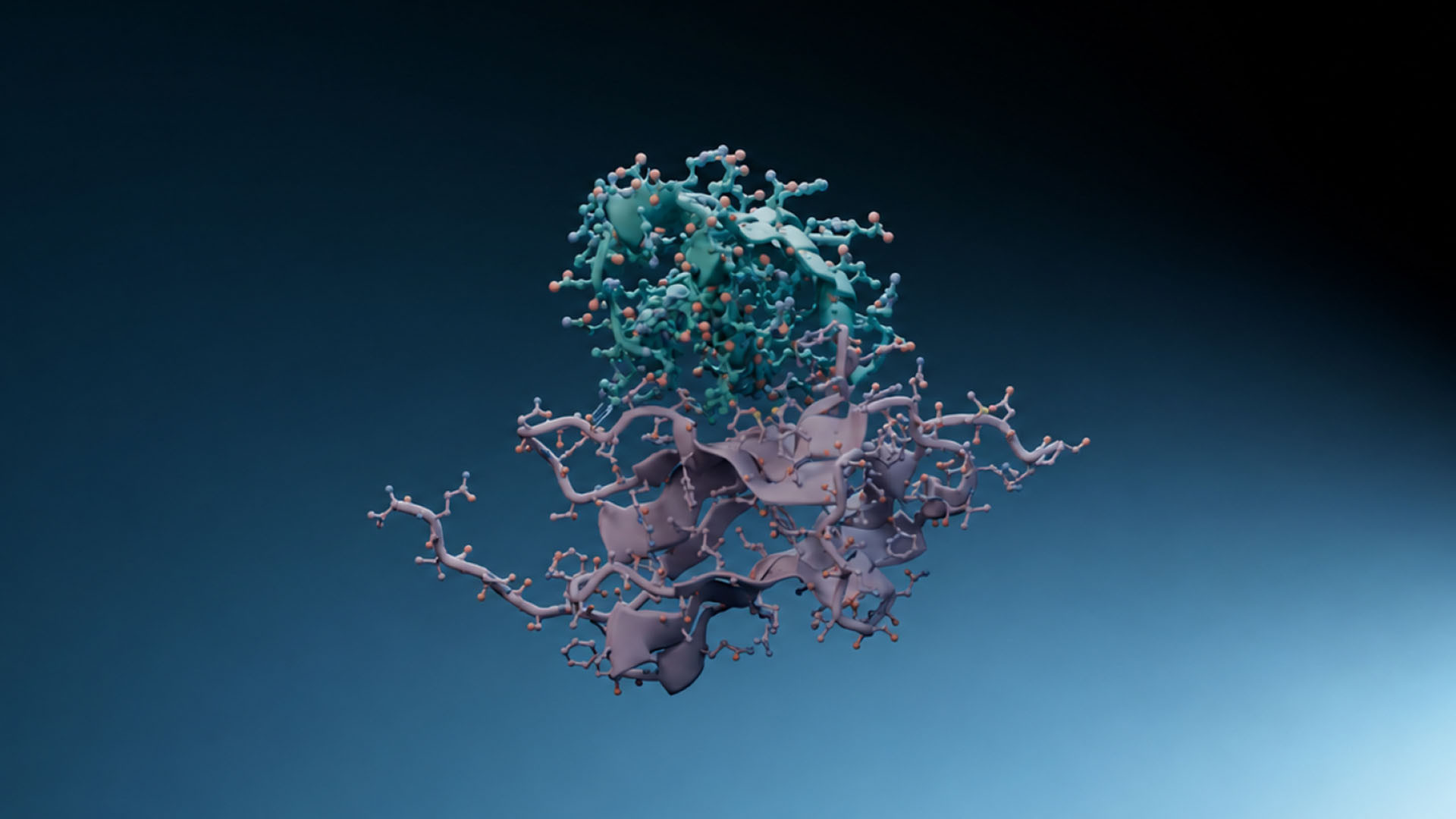
- Manchester researchers working with the Institute for Protein Design demonstrated AI-designed enzymes for a key chemical reaction involved in making lenacapavir.
- Four of 67 enzyme designs tested showed clear activity, with the best converting 79% of the starting amine into the desired product 鈥� a proof of concept for tackling challenging steps in drug synthesis.
- Across computational benchmarks, RFD4-Proteina achieved design success rates five to ten times higher than previous models and generated protein candidates five to ten times faster.
AI-based protein design is already transforming protein science, but RFD4-Proteina differs in how it tackles the design problem. The model can consider several interconnected aspects of structure and function simultaneously, refining a protein鈥檚 amino-acid sequence and three-dimensional structure alongside the molecules with which it interacts. It can also direct more computational effort towards promising designs, helping researchers identify candidates with specific functions more efficiently.
Researchers at 花椒直播's (MIB), including , Dr Henry Jones and Dr Zefei Xu worked in collaboration with IPD to apply RFD4-Proteina to design de novo enzymes for low cost and sustainable production of global health drugs.
One of the team's most significant tests focused on the synthesis of lenacapavir, a breakthrough drug used for HIV prevention. RFD4-Proteina was used to design entirely new enzymes capable of catalysing a key amide-bond-forming reaction involved in the drug's synthesis. Of the 67 designs selected for experimental testing, four showed clear activity, with the best converting 79% of a bulky chiral amine into the desired amide product. The enzyme also displays high selectivity for the S-enantiomer of the amine as required for the Lenacapavir synthesis. This reaction is particularly challenging because the enzyme must favour the desired amide bond-forming process while suppressing a competing reaction with water which is present in a vast excess in enzyme mediated transformations.
This research represents a critical proof-of-concept demonstration that new enzymes can be designed computationally to promote challenging steps in the synthesis of active pharmaceutical ingredients.听
听

It was a pleasure to work with the IPD team to road-test the new RFD4-Proteina model on a highly complex and valuable enzyme design challenge. The initial results are spectacular and show how these advanced models can rapidly deliver new biocatalysts for producing therapeutics and other essential chemicals.
Proteins for health, the environment and industry
Proteins are essential for life and perform a wide range of functions, for example, enzymes speed up chemical reactions involved in metabolism, while antibodies bind to pathogens to help fight infection. Proteins are also important in manufacturing chemicals and materials used in everyday products, including medicines and fuels. But designing new functional proteins such as enzymes is difficult.
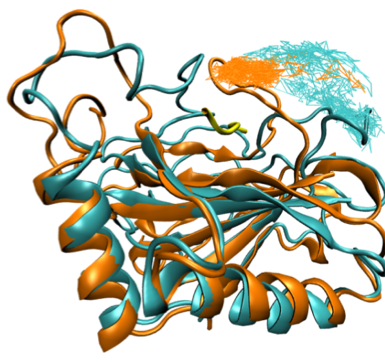 Enzymes found in nature have traditionally provided the starting point for scientists seeking to engineer biocatalysts with useful functions. More recently, computational protein design has made it possible to design completely new proteins. However, this remains difficult as scientists must find a combination of amino-acid sequence, three-dimensional structure and molecular interactions capable of performing the intended task from an enormous number of possibilities.
Developed by Professor David Baker and his team at the University of Washington鈥檚 Institute for Protein Design (IPD), RFD4-Proteina was designed to address this problem. It combines two existing AI models 鈥� the IPD鈥檚 RosettaFold Diffusion line and Proteina-Complexa from NVIDIA 鈥� allowing scientists to design brand new proteins with a specified function, focusing laboratory testing on a handful of the most promising candidates.
鈥淩FD4-Proteina will open the door to new solutions in medicine, sustainability, materials and biotechnology,鈥� said David Baker, IPD director and professor of biochemistry at the University of Washington School of Medicine. Baker is a Howard Hughes Medical Institute Investigator and a recipient of the 2024 Nobel Prize in Chemistry.
In silico 鈥� the virtual world of protein design
RFD4-Proteina鈥檚 biomolecular reasoning is novel; it learns the 鈥渓anguage鈥� of existing proteins by training on a large dataset, and tests in silico a huge number of design possibilities to fit a desired function.
Like language models with adjustable 鈥渢hinking鈥�, RFD4-Proteina can devote more computation to difficult problems. It concurrently refines a protein鈥檚 sequence and structure alongside the structures of interacting molecules, so that a change in one seamlessly informs changes in the others.
Across computational benchmarks, RFD4-Proteina achieves design success rates five to 10 times higher than previous models while generating protein candidates five to 10 times faster. Lab bench tests validated that the model鈥檚 protein outputs act as anticipated in an experimental setting. This testing demonstrated success across biomolecular tasks of varying sizes, complexities and functions. Importantly, the model is open source under a BSD-3 licence, allowing researchers to use it in their own protein-design work and build upon it.
This model offers a way to design proteins faster and more accurately to perform specific jobs, potentially accelerating early-stage development of new medicines, antibodies, diagnostic molecules, enzymes and industrial biotechnology processes.
Full title of the paper: Biomolecular design through latent reasoning with RFD4-Proteina
Preprint URL: